

Understanding Thermal Optics: A 2026 Buyer’s Guide
Thermal optics have become more accessible than ever, but choosing the right thermal scope or monocular can still be confusing. Resolution, pixel pitch, NETD, refresh rate, lens size, magnification, field of view, and detection range all affect performance, but they do not matter equally in every application. Understanding what each specification means helps you get the most performance for your money.
Thermal Optics Sensor Resolution
Sensor resolution is one of the most important & highly discussed specifications. Common thermal resolutions include 256×192, 384×288, 640×512, and now 1280×1024. A higher-resolution sensor contains more pixels, capturing more detail.
A 256×192 sensor can provide excellent close- to moderate-range performance and is often the best way to enter the thermal market. Moving to 384×288 provides more image detail, while 640×512 is better suited to users who want maximum clarity at longer distances.
The lens, pixel pitch, NETD, image processing, and display also influence the final image.
Pixel Pitch: 12µm vs. Larger Pixels
Pixel pitch refers to the physical size of each pixel on the thermal sensor. Smaller pixel pitches, such as 12µm, allow manufacturers to achieve higher resolution in compact sensors and work particularly well with smaller optical systems.
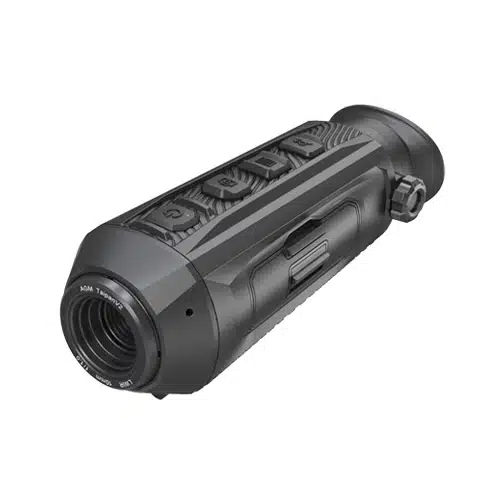
Many value-oriented thermals at Kenzie’s use 12µm sensors. The AGM Taipan V2 10-256 uses a 12µm VOx sensor, while the Taipan V2 19-384 uses 384×288 12µm technology. Both are attractive for buyers balancing price and image quality.
NETD and Thermal Optics Sensitivity
NETD, or Noise Equivalent Temperature Difference, measures how well a thermal sensor can distinguish small differences in temperature. Lower numbers generally indicate greater thermal sensitivity and the ability to separate subtle heat signatures.
NETD is expressed in millikelvin, or mK. Below 20mK is generally considered very sensitive, while newer premium sensors can achieve even lower ratings.
NETD becomes especially important in fog, rain, humidity, or when a target’s heat signature is close to its surroundings.
Refresh Rate
Refresh rate, measured in hertz (Hz), describes how many times the thermal image is updated each second. A 50Hz thermal optic updates the image 50 times per second, producing smooth movement when scanning or tracking.
For most hunting and outdoor applications, 50Hz is a strong target. It generally makes moving targets and handheld scanning feel more natural.
Lens Size and Focal Length
The objective lens has a major impact on field of view and magnification. Larger lenses are commonly paired with longer-range systems.
A shorter focal length provides a wider field of view, useful for scanning and locating targets. Longer focal lengths narrow the field of view but increase native magnification and can make distant objects easier to identify.
Choose a 19mm, 25mm, 35mm, or 50mm lens based on how you plan to use the thermal—not simply on which number is larger.
Magnification and Field of View
Higher native magnification makes distant targets appear larger, but narrows the field of view. A wider field of view makes scanning faster and helps maintain awareness.
Digital zoom is convenient, but it does not create new sensor detail. Prioritize the right native magnification and sensor resolution.
Detection Range vs. Identification
One of the most misunderstood specifications is detection range. A manufacturer’s stated detection range generally describes the distance at which the system can detect that something is present—not necessarily identify exactly what that object is.
Identification requires considerably more detail. Sensor resolution, lens size, atmospheric conditions, target size, and thermal contrast all affect real-world identification distance. Treat published detection figures as a reference rather than a guarantee of performance in every environment.
Display Quality and Image Processing
The display is where the thermal image reaches your eye, so it matters. Higher-resolution OLED or LCOS displays can make the image easier to interpret and help you take advantage of a higher-resolution sensor.
Image processing can also make a significant difference. Enhancement, color palettes, hot tracking, picture-in-picture, and scene modes can improve usability.
Laser Rangefinders and Ballistic Features
For thermal riflescopes, an integrated laser rangefinder can be useful. A rangefinder provides distance information for ballistic calculations on compatible optics.
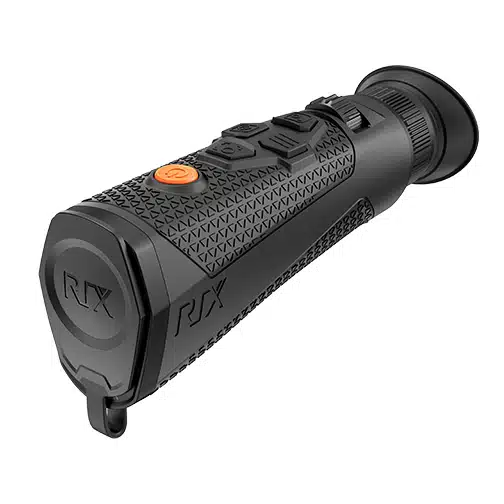
Kenzie’s current lineup includes options such as the RIX Storm S3R, which combines a thermal riflescope with an integrated rangefinder and ballistic functionality. The AGM Rattler V3 LRF 35-384 also combines a 384×288 sensor, sub-15mK NETD, a 1,000-meter laser rangefinder, and an onboard ballistic calculator.
If you’re budget allows, the Nocpix RICO 3 lineup delivers a respectable 2560×2560 display, LRF capabilities, and Reality+, an advanced artificial intelligence image enhancement algorithm developed by Nocpix for their thermal imaging optics.
Best Cost-to-Quality Thermal Options at Kenzie’s Optics
For buyers focused on value, several strong choices stand out.
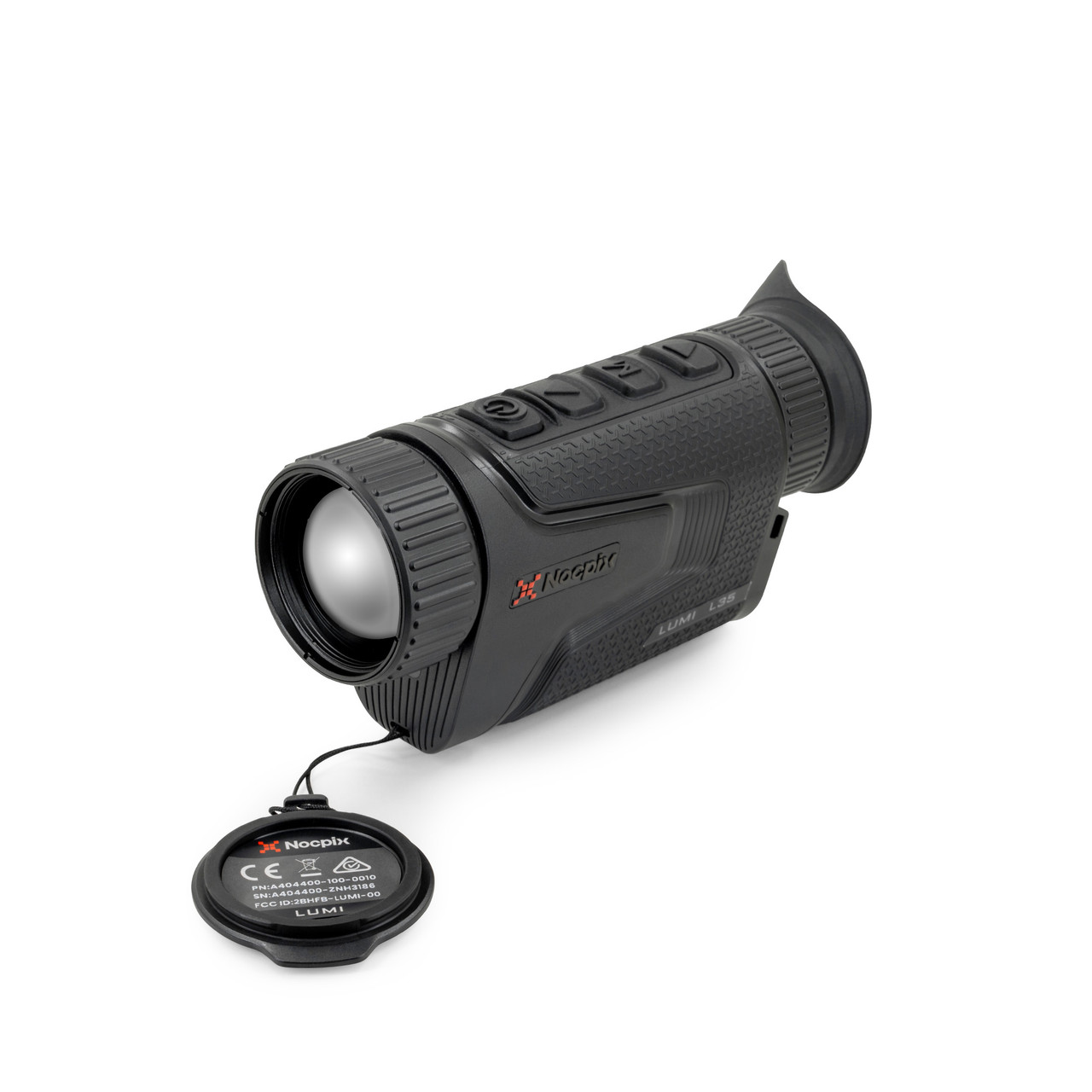
At the entry level, the AGM Taipan V2 10-256 is an excellent affordable thermal monocular. For buyers wanting better image quality, the AGM Taipan V2 19-384 is compelling. The Nocpix LUMI P13 is another standout value for compact handheld use.
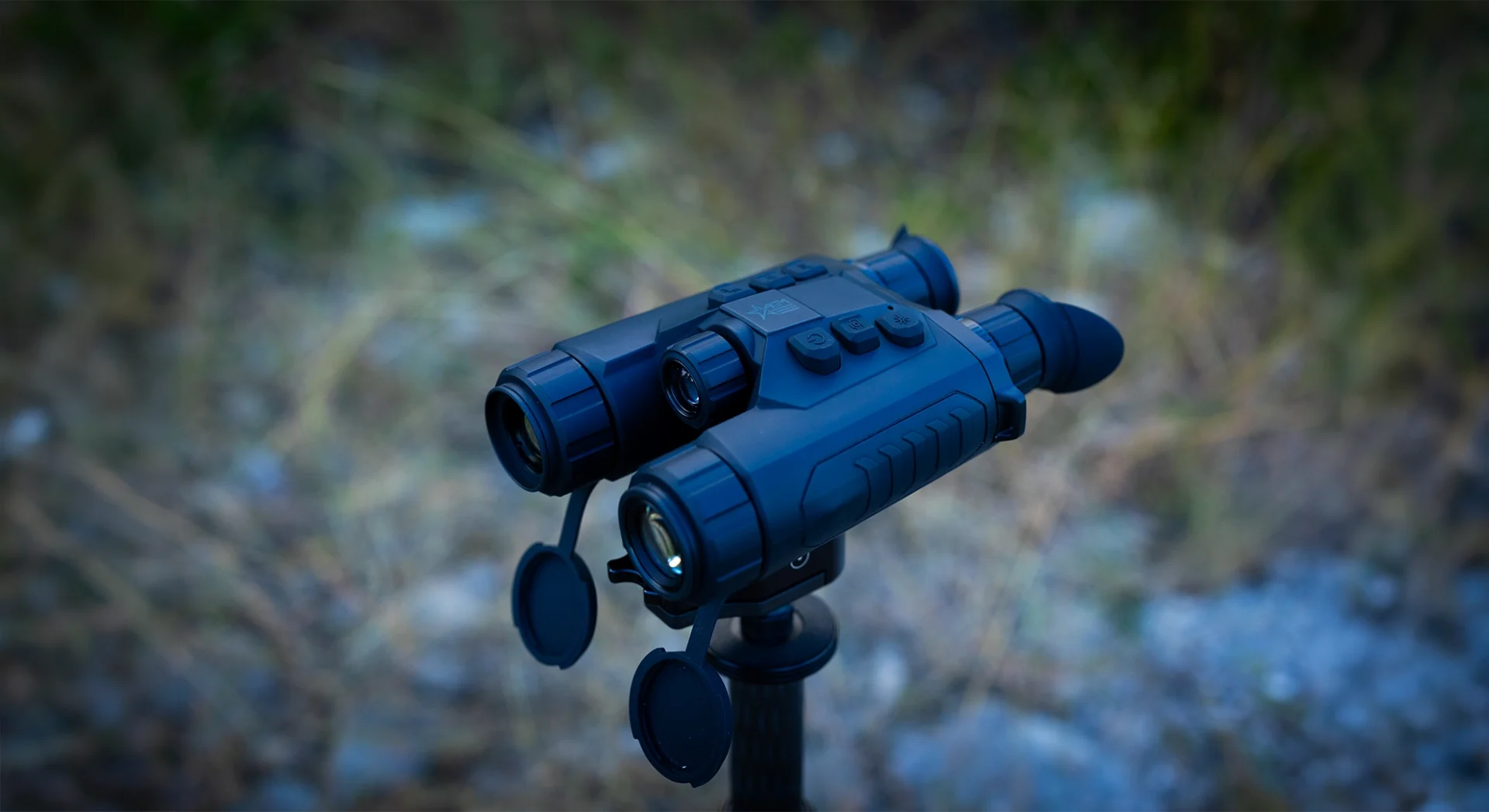
For long-range observation, the AGM Reach IR 35-640 is a substantial upgrade. Its 640×512 sensor, 35mm F/1.0 lens, sub-20mK NETD, 50Hz refresh rate, 1024×768 OLED display, and integrated 1,000-meter laser rangefinder make it a feature-rich option.
For rifle-mounted performance, the AGM Rattler V3 LRF 35-384 is a particularly strong value. It combines a 384×288 12µm sensor, sub-15mK NETD, 35mm F/1.0 lens, 1920×1080 OLED display, 1,000-meter laser rangefinder, ballistic calculator, and more than seven hours of battery life.
Ultimately, the best thermal is not necessarily the one with the highest resolution or longest detection range. The best value comes from matching the sensor, lens, sensitivity, magnification, and features to your actual needs. By understanding these specifications before you buy, you can spend your budget where it will have the biggest impact on real-world thermal performance.